News
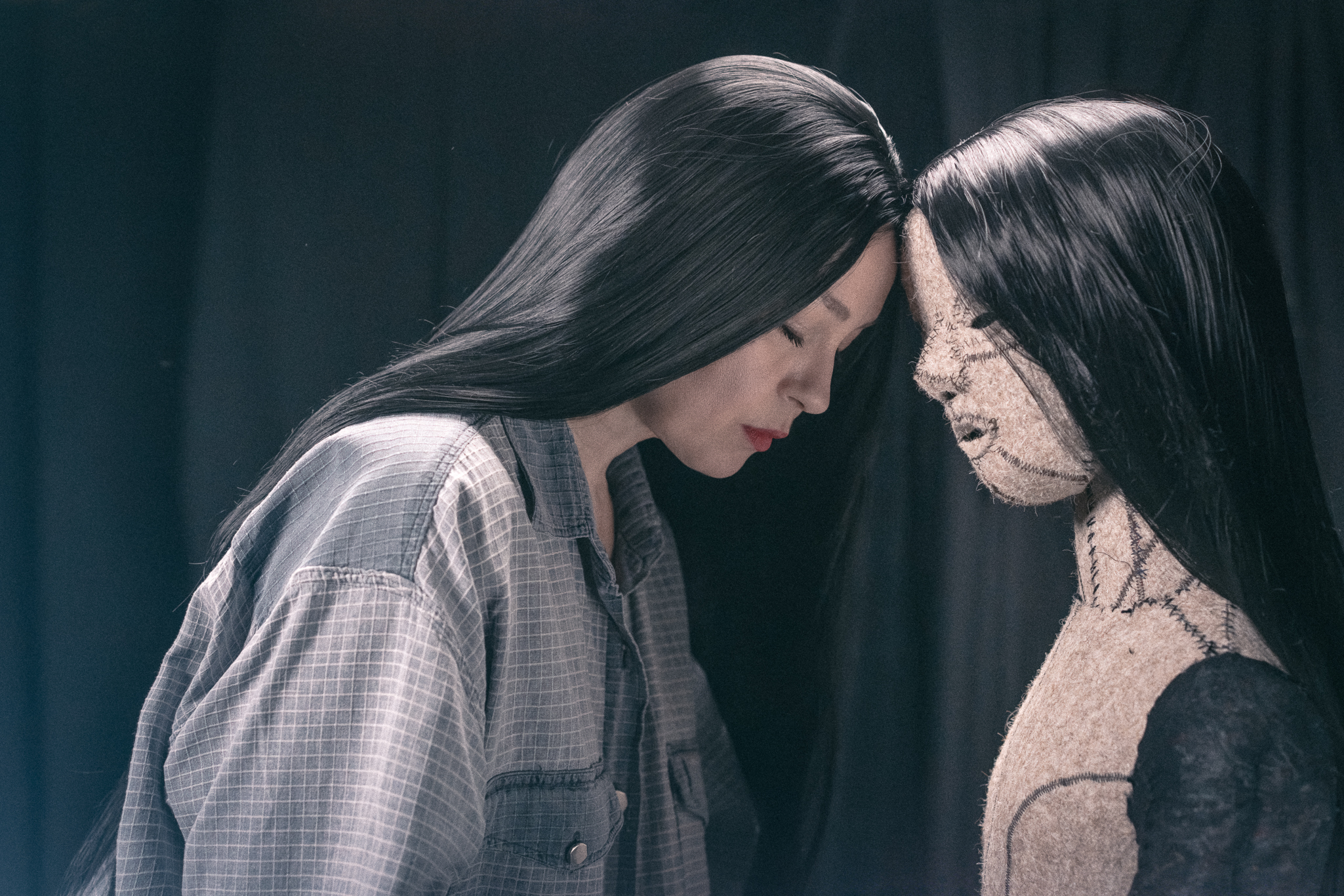
The Premiere of NONFICTION
Mother, Daughter, and the Right to Tell a Story
HaWa (Aneta Wawrzoła & Grzegorz Habryn)
What is motherhood stripped of idealization – an experience of love that offers no sense of agency, and a responsibility that cannot protect us from failure? Can art reach into the most intimate experiences when the price of telling a story is exposing someone’s life?
・
On 3 October, the premiere of NONFICTION, directed by Gosia Wdowik, will take place at the Chamber Stage of the National Stary Theatre. Based on Julie Myerson’s novel, adapted by Martyna Wawrzyniak, the production explores a form of motherhood that escapes social ideas of unconditional love, closeness and responsibility. It is a story of parents helpless in the face of their adult child’s choices, an account of the need for separation, and of the boundary between care and a sense of ownership.
・
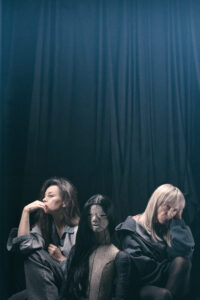
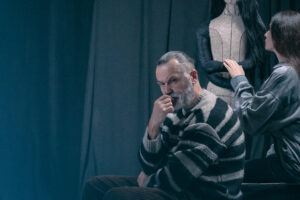
In the performance, literature meets visual art on stage through the sculpture-dolls created by Aneta Grzeszykowska. Entrusting the daughter’s character to sculptures changes the way audiences can perceive her presence on stage. The doll becomes a protagonist, existing somewhere between an object and a living person. Addiction is not presented here as a social problem, but as a force that leads to the breakdown of relationships. We observe it from the perspective of the parents, torn between fear for their child and the desire for the crisis to finally bring about change. In this context, the dolls become a metaphor for unfulfilled expectations of a child and the painful confrontation with their separateness.
・
“I have a habit of inviting visual artists to collaborate. In theatre, words are meant to name things, to bring them to a close, while art is meant to open them up. I have an affair with art in order to create a stage world that remains open to interpretation.”
Gosia Wdowik
・
Grzeszykowska’s objects introduce an additional layer of meaning. The doll evokes associations with a child’s body, while at the same time reminding us that what we are looking at is an object devoid of its own agency. The presence of the sculptures opens up a space between documentary and fiction, reality and imagination. As Aneta Grzeszykowska puts it:
・
“Paradoxically, I feel that introducing such an artificial object, one that represents a human being, into the equally conventional and artificial space of the theatre may produce the opposite effect. As if two levels of fiction suddenly began to generate something very real.”
・
This tension between fiction and truth lies at the very heart of NONFICTION. The production emerges from one of the most widely debated controversies surrounding the boundaries of autofiction and the right to tell stories that concern not only the author but also those close to them. Its central figure is Julie Myerson.
・
Julie Myerson is a British writer and critic, and the author of novels and non-fiction books. She gained recognition, among other things, for her novel Something Might Happen, while her 2009 book The Lost Child: A True Story sparked a particularly heated debate. In it, she described her own family’s experiences and her teenage son’s addiction. The publication placed Myerson at the centre of a dispute over privacy, a writer’s responsibility, and the right to tell stories that do not belong exclusively to one person. In the novel Nonfiction, published more than a decade later, the author returned to themes of addiction, motherhood and family loss, this time giving the personal material the form of fiction. The question of whether an author telling her own story can be fully trusted becomes one of the central tensions of both the book and the performance.
・
In her productions, Gosia Wdowik combines personal experience with an examination of the social mechanisms that shape the body, work and our sense of agency. Her theatre grows out of a collaborative process, observation and encounters between different artistic practices; rather than closing a performance within a single interpretation, she gives audiences time to interpret the images for themselves.
In Dziewczyny (Girls) and Piłkarze (Footballers), she explored the theme of bodily emancipation; in Wstyd(Shame), she examined the class experience of three generations of women; while in She was a friend of someone else, presented as part of Kunstenfestivaldesarts in Brussels, she explored the relationship between burnout, activism and the possibility of taking action.
・
Aneta Grzeszykowska is an interdisciplinary artist whose practice focuses primarily on photography, film and objects. For years, she has explored the relationship between the body and its representation, presence and disappearance, and private biography and images subjected to artistic manipulation. She graduated from the Faculty of Graphic Arts at the Academy of Fine Arts in Warsaw and is a recipient of the Paszport Polityki award in the visual arts category, as well as the Wojtek Falęcki Award. Her works have been presented at major international exhibitions and are held in museum collections including those of the Centre Pompidou, the Solomon R. Guggenheim Museum and the Museum of Modern Art in Warsaw.
The sculptures created specifically for the performance refer to Grzeszykowska’s Franciszka series, in which she depicted her daughter in the future – at an age the child had not yet reached. The dolls became projections of parental imaginings, expectations and the desire for the child’s happiness.
・
In Martyna Wawrzyniak’s adaptation, addiction is not presented as a separate social problem, but as a force that exposes the tensions inherent in the relationship between parent and child. The dolls become a metaphor for unfulfilled expectations, the desire to keep a child close, and the necessity of acknowledging their separateness – even when they choose a way of life their parent cannot accept.
HaWa (Aneta Wawrzoła & Grzegorz Habryn)
・
Cast:
Bogumiła Bajor / Alicja Jurkowska, Zbigniew W. Kaleta, Dorota Pomykała, Kamil Pudlik, Małgorzata Zawadzka
Creative team:
Gosia Wdowik – direction
Martyna Wawrzyniak – adaptation
Aleksandr Prowaliński, Gosia Wdowik – set design
Aneta Grzeszykowska – sculptures
Maja Wolak – costumes
Aleksandr Prowaliński – lighting design
Agata Zemla – music and sound design
Marta Orczykowska – translation
Hanna Nowak – stage manager