News
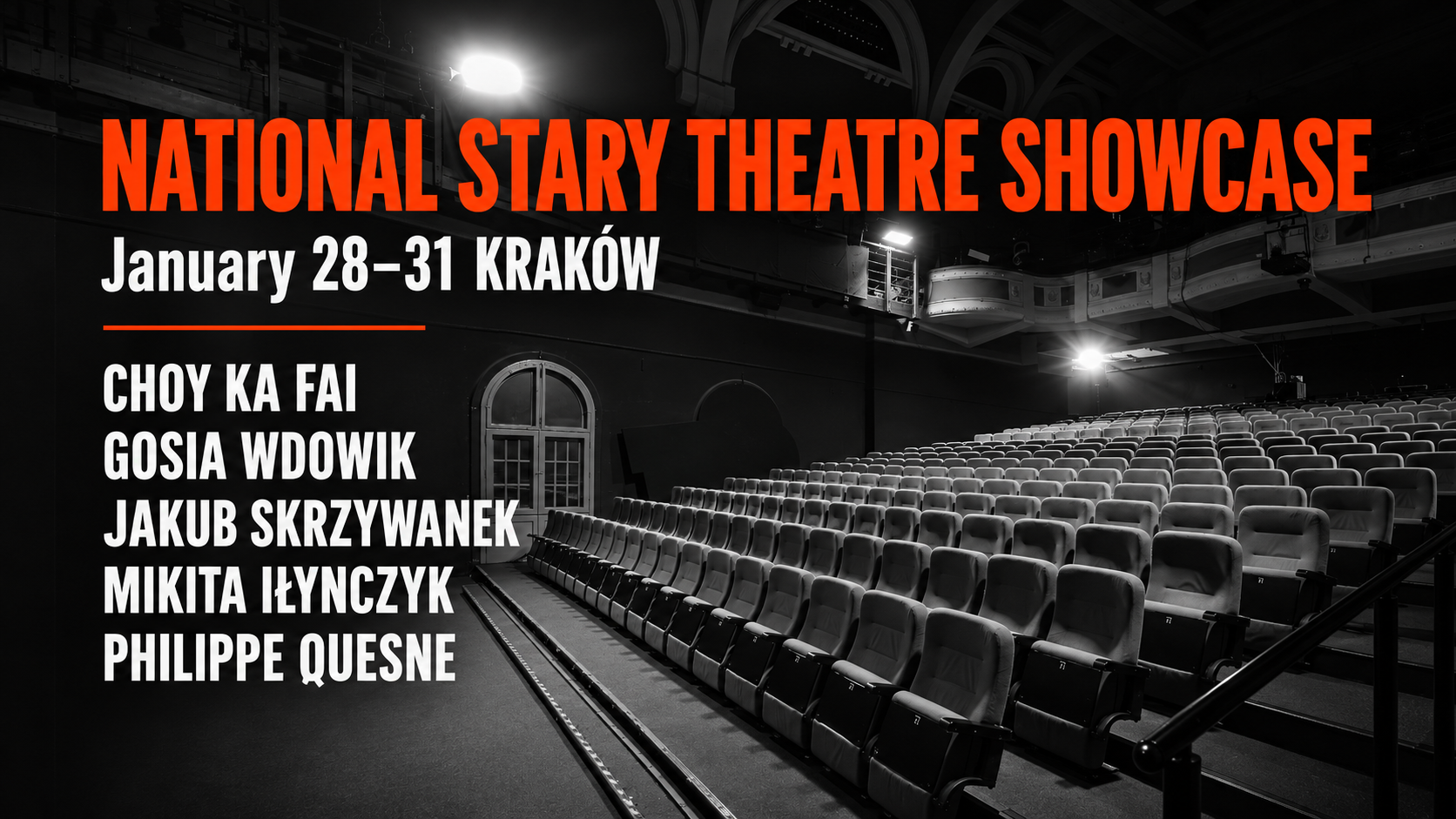
NATIONAL STARY THEATRE SHOWCASE
Following its December presentation at the Divine Comedy International Theatre Festival, A HUNDRED GAZES returns as the opening performance of the National Stary Theatre’s January showcase.
Its creator, Choy Ka Fai, is a Singaporean artist based in Berlin and Singapore, whose work has been presented at numerous international venues and festivals, including HAU Hebbel am Ufer and Tanz im August in Berlin, Sadler’s Wells in London, ImPulsTanz in Vienna, and the SPRING Performing Arts Festival in Utrecht.
In A HUNDRED GAZES, Choy Ka Fai uses technology and a vision of the near future to explore intimacy, the gaze, and what remains untranslatable into code when encountering another human being.
Ghosts and Landscapes | An Exhibition by Philippe Quesne CRICOTEKA
This is the first comprehensive presentation of set design elements by French director and scenographer Philippe Quesne, one of the most distinctive figures in contemporary European visual theatre.
Quesne’s stage designs are often images constructed on stage, serving as a means of observing human microcosms. Together with the Tadeusz Kantor Art Documentation Centre (CRICOTEKA), we invite you to reflect on the connections between the French artist’s theatrical work and the artistic practice of Tadeusz Kantor.
E:/MIGRANTS | Mikita Iłynczyk
What if Poland were to cease being a country of emigration and instead become a place people seek to return to?
This play reverses the perspective of Sławomir Mrożek’s Emigrants, one of the most frequently staged works by a Polish playwright abroad. The descendants of former emigrants return to a new Poland, where they must prove their right to stay.
Migration, assimilation, digital surveillance and the question of who can be considered one of us place the Polish experience within a broader conversation about contemporary Europe.

THE NEIGHBOURS | Jakub Skrzywanek
Jakub Skrzywanek is one of the most recognisable artists of his generation in Polish theatre. His productions have been reviewed by leading international publications, including The New York Times, The Financial Times and Frankfurter Allgemeine Zeitung.
In THE NEIGHBOURS, Polish-Jewish and Polish-Ukrainian history serves as a starting point for a question that is particularly relevant in contemporary Europe: how can a community burdened by the memory of violence be rebuilt?
Based on documents, testimonies and archival materials, the production explores responsibility, memory and the possibility of coexistence in a region reshaped by war.
Four days during which you’ll have the opportunity to take a close look at the National Stary Theatre’s latest artistic explorations.
The programme explores two key themes of the season: Radical Curiosity, which opens theatre up to experimentation, new media, visual arts and unconventional storytelling methods; and Poland: Check It!, which examines contemporary Poland through its myths, collective memory, migration and evolving definitions of community.
・
Rather than simply reviewing the repertoire, the programme invites audiences to reflect on what kind of theatre we need in a world where reality is changing faster than the language we use to describe it.
・
NATIONAL STARY THEATRE SHOWCASE
January 28–31 | Kraków
JANUARY 28
6:00 p.m. | A HUNDRED GAZES Directed by Choy Ka Fai
JANUARY 29
All day | Ghosts and Landscapes Exhibition by Philippe Quesne
5:00 p.m. | E:/MIGRANTS Directed by Mikita Iłynczyk
JANUARY 30
4:00 p.m. | Choose one:
- E:/MIGRANTS, directed by Mikita Iłynczyk
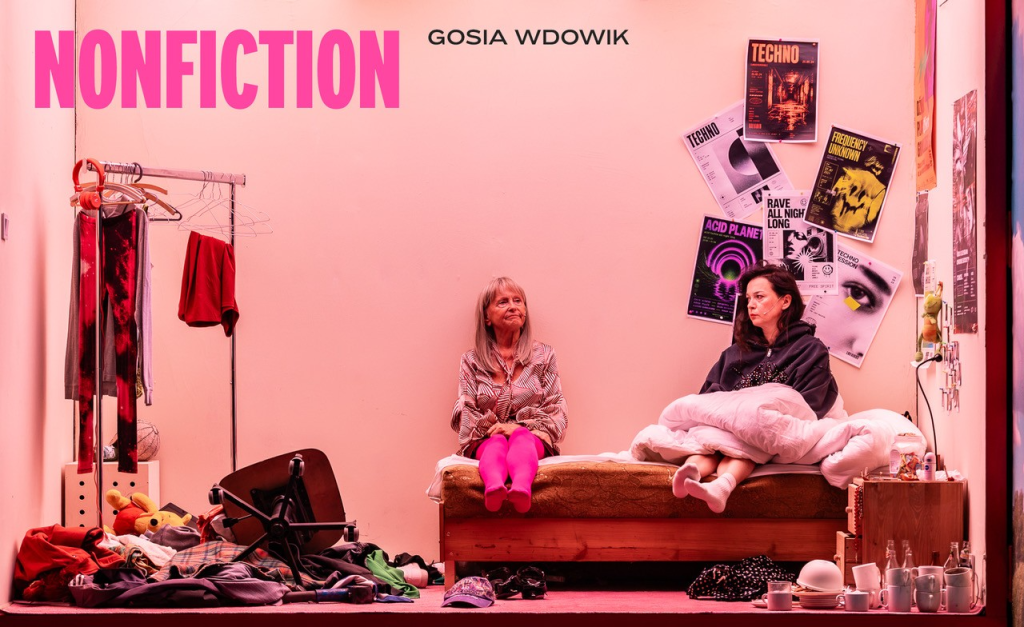
- NONFICTION, directed by Gosia Wdowik
7:00 p.m. | THE NEIGHBOURS Directed by Jakub Skrzywanek
JANUARY 31
4:00 p.m. | Choose one:
- E:/MIGRANTS, directed by Mikita Iłynczyk
- NONFICTION, directed by Gosia Wdowik
7:00 p.m. | THE NEIGHBOURS Directed by Jakub Skrzywanek
CHOOSE YOUR OWN PATH
The programme scheduled for January 30 and 31 allows guests to create their own path through the showcase.
You can choose Mikita Iłynczyk’s E:/MIGRANTS if you are interested in migration, identity and a changing Europe, or Gosia Wdowik’s NONFICTION, which draws on stories of motherhood and addiction to raise questions about the ethical boundaries of transforming intimate experiences into artistic material.
Both paths lead to Jakub Skrzywanek’s THE NEIGHBOURS in the evening. Drawing on Polish-Jewish and Polish-Ukrainian relations, as well as documents, testimonies and archival materials, the production explores memory, responsibility and the possibility of living side by side after experiencing violence.
In a Central and Eastern European reality once again being reshaped by war, the question “What does it actually mean to be a neighbour?” takes on particular significance.